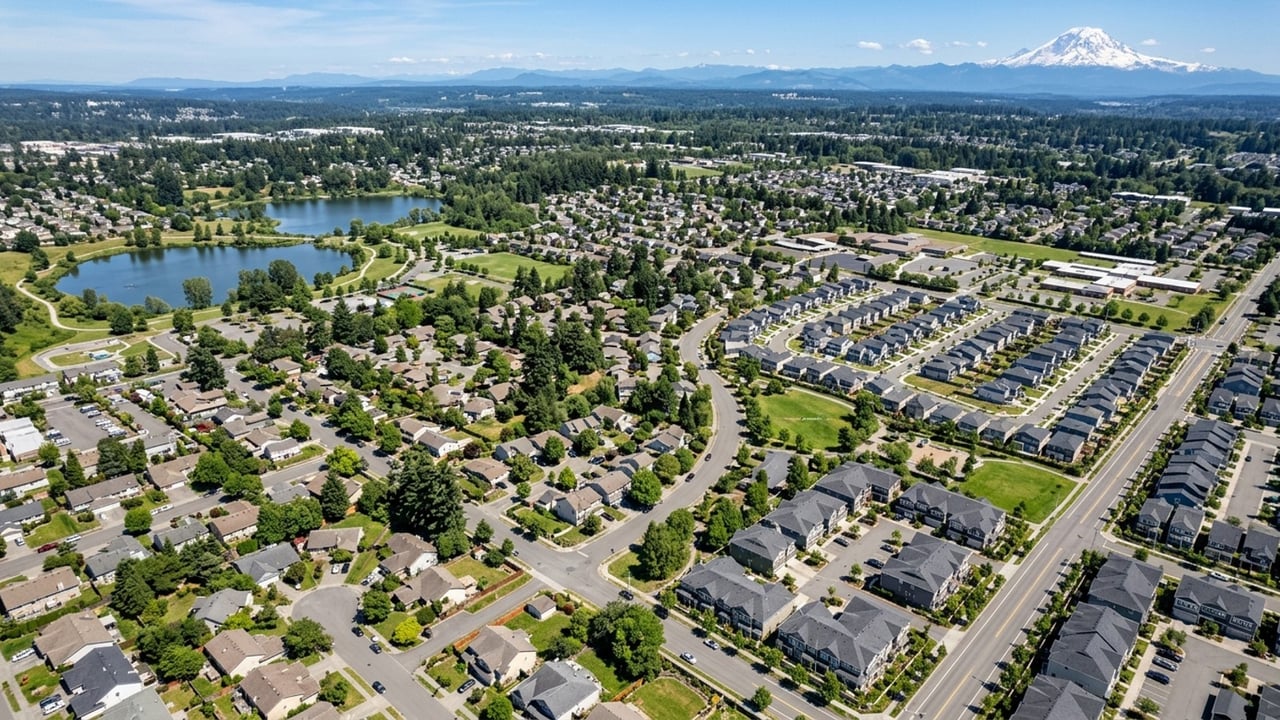
The median home price in Marysville, WA sits at $634,655 as of mid-2026. Located in Snohomish County, this city is a major residential hub within the broader Seattle–Tacoma–Bellevue metropolitan area - and anyone buying a home in Marysville, WA is often surprised by how much variety they find here. Established subdivisions, historic properties, new construction master-planned communities: they're all in the mix.
With roughly 76,200 residents, Marysville has enough distinct areas that where you buy matters as much as what you buy. Your target price point, the type of home you want, and how close you need to be to major commuter routes will all shape the decision. Here's a breakdown of what you'll find across the city.
How Marysville is Organized
Marysville covers a substantial footprint in Snohomish County, stretching from the waterfront areas near the Snohomish River delta up toward the northern commercial centers. A central downtown corridor runs through the middle, with residential subdivisions fanning out to the east, north, and west. Interstate 5 cuts directly through the city, drawing a clear line between the western sections and the eastern hillside communities.
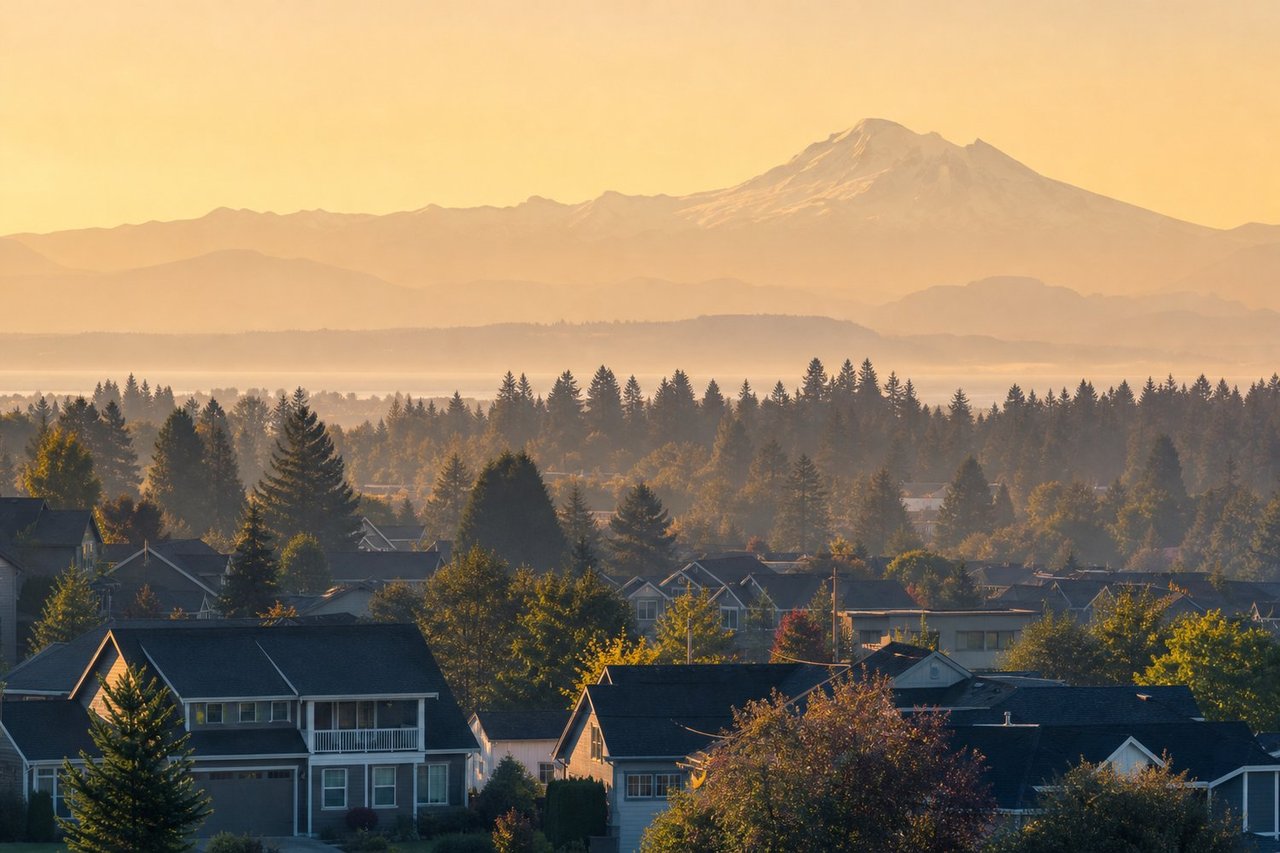
A couple of landmarks are worth knowing if you're orienting yourself. To the east, residents have clear views of Mount Pilchuck's 5,300-foot peak. On the western side, Gissberg Twin Lakes Park offers 44 acres of recreation space - man-made lakes, walking trails, picnic areas - and anchors that whole side of town.
Mapping Out the Local Communities
Buyers exploring the local market will encounter over a dozen named neighborhoods and distinct subdivisions. The primary areas include Downtown Marysville, East Sunnyside, Sunnyside, Shoultes, Smokey Point, Getchell, Jennings Park, Cedarcrest, Whiskey Ridge, Lakewood, Kellogg, Pinewood, Soper Hill, and Crosswater. Each has its own mix of property styles, lot sizes, and proximity to city amenities.
Where a neighborhood sits on that map has a direct effect on your daily life. Lakewood and Smokey Point, on the western edge, give you immediate access to I-5 - useful if you're commuting south to Everett or Seattle. Getchell and Whiskey Ridge, further east, are a longer drive to the highway, but you'll typically find larger lots and newer development out that direction.
Home Types and Prices Across the City
The Marysville housing market runs the full spectrum - early 1900s craftsman homes on one end, brand-new master-planned developments on the other. The citywide median sale price is approximately $635,000, but individual neighborhoods trend noticeably higher or lower depending on the dominant housing type and how old the stock is. Expect real variation, not just rounding errors.
Attached housing and smaller single-family homes cover the entry-level end of the market. Expansive new builds command premium prices. Knowing how those property types are distributed across the city will save you a lot of time narrowing down your search.
Areas with Detached Single-Family Homes
Sunnyside, East Sunnyside, and Pinewood are your classic established subdivisions - mostly detached single-family homes built in the mid-to-late 20th century, mature landscaping, traditional floor plans, mid-sized lots. Homes here often list close to the city median, though updated properties sell for more.
Head further east and the picture changes. Getchell and Cedarcrest offer larger detached homes, most of them built within the last twenty years, with more uniform streetscapes and bigger square footage. Prices in those eastern sections frequently exceed the $635,000 median, particularly for homes with four or more bedrooms.
Attached Homes and New Construction
If low-maintenance living or a brand-new home is the priority, Smokey Point, Soper Hill, and Crosswater are where you'll spend most of your time looking. Smokey Point has a high concentration of townhomes and condominiums - price points that generally come in below the city median, and no yard to deal with.
Soper Hill and Crosswater are a different story. Both areas have seen significant residential expansion recently, with master-planned communities featuring contemporary designs, energy-efficient features, and modern neighborhood layouts. Because you're buying new construction, sale prices reflect a premium over older properties in the central districts. That's the trade-off.
Specific Area Profiles
The housing stock shifts noticeably as you move from the historic center toward the city limits - different eras of construction, different lot sizes, different price brackets. It's worth understanding what you're walking into before you start scheduling showings.
Proximity to local features also plays into values here. Homes near major parks or with unobstructed mountain views tend to attract more buyer interest, which shows up in asking prices.
Central and Historic Areas
Downtown Marysville and the adjacent Jennings Park neighborhood hold the city's oldest housing stock. You'll find historic homes, mid-century properties, and smaller lots clustered near the commercial center. Prices vary widely depending on condition - fixer-uppers here can come in well below the city median, which makes this area worth a look for buyers with some flexibility.
Jennings Park itself benefits from proximity to the park's open spaces and recreational facilities. It's also the part of town with the shortest distances to local municipal services and the older commercial corridors.
Lakefront and Western Corridors
The western side of Marysville - Lakewood and the areas around Gissberg Twin Lakes Park - has its own character. The 44-acre park, with its walking trails and swim area, creates a genuine focal point for the surrounding neighborhoods. Housing here ranges from established single-family homes to newer attached units.
The defining feature of this corridor is I-5 access. That's a real advantage for commuters. Properties closest to the interstate can experience road noise, though, so visit at different times before you make any decisions.
Housing Market and Cost of Living
As of mid-2026, Marysville is a competitive market. Homes are selling in an average of just 12 days, the median sale price is holding at $634,655, and sellers are receiving about 100.1% of asking price on average. If a listing is priced right, you need to move quickly and come in strong.
The city maintains about three months of housing supply, which keeps things relatively balanced - but only slightly. It still leans toward sellers. Factor local property taxes and utility rates into your cost-of-living math alongside the mortgage payment. For crime data on specific areas, the local police department or the Snohomish County Sheriff's office are your best sources.
Finding Your Home in Snohomish County
Inventory fluctuates through the year. During peak summer months, you'll see roughly 255 homes on the market, but properties in popular subdivisions like Shoultes or Kellogg can move before you've had a chance to think about it. A local agent who's tracking new inventory as soon as it lists is worth having in your corner.
School boundaries are determined by your specific street address - not the neighborhood name, not the subdivision. Review the official attendance-zone maps from the local school districts before you make an offer, not after. And a targeted search built around your preferred home type and budget will make the whole process less chaotic.
Frequently Asked Questions
What are the best neighborhoods in Marysville, WA for families with school-aged children?
School assignments depend entirely on your specific address, not the general neighborhood name. Consult the official attendance-zone maps from the local school districts to confirm which schools serve a given street in subdivisions like Sunnyside or Pinewood before you make any assumptions.
Which Marysville neighborhoods offer the easiest commute times south to Everett or Seattle?
Lakewood and Smokey Point, on the western edge of the city, give you the fastest access to Interstate 5. That immediate highway access means less time on local surface streets during the morning commute - which matters more than people realize until they've sat through a few of them.
Where are the most affordable neighborhoods for first-time homebuyers in Marysville?
Smokey Point and the areas immediately surrounding Downtown Marysville tend to offer the most accessible price points. You'll find higher concentrations of townhomes, condominiums, and older single-family homes that list below the citywide $635,000 median.
Are there any areas in Marysville that buyers should avoid due to flood zones or heavy train noise?
Properties near the Snohomish River delta or along the western railway corridors may experience different environmental factors. Review Snohomish County flood maps, and visit properties at different times of day to get a realistic read on train or highway noise before you commit.
Which parts of Marysville, WA have the most new construction homes and master-planned communities?
Soper Hill and Crosswater currently have the highest concentration of recent residential development. These eastern and northern expansions are where you'll find modern master-planned communities with contemporary home designs.
Do popular neighborhoods in Marysville typically have strict HOAs and high monthly dues?
Newer master-planned developments in areas like Soper Hill, Cedarcrest, and Crosswater almost always include Homeowners Associations. The rules and monthly dues vary widely across the city, so read the specific HOA documents for any subdivision you're seriously considering - don't assume they're all the same.