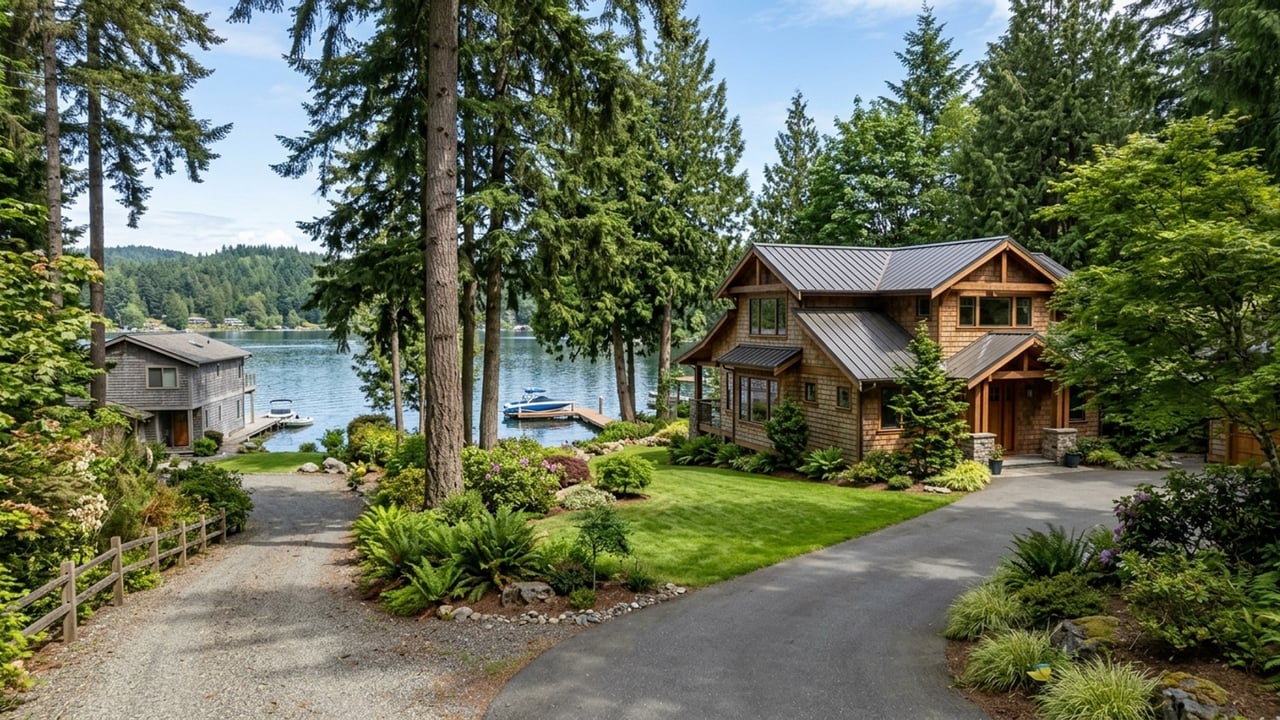
Lake Stevens, WA, sits about 6 to 8 miles east of Everett, built around the large body of water that shares its name. Right now, the housing market here moves fast for buyers interested in living in Lake Stevens - available homes are spending roughly 12 days on the market, with median sale prices hovering around $685,000.
Modern buyers tend to focus on the waterfront access and the suburban feel, and that makes sense. But the area has deep roots in the Pacific Northwest timber industry, and knowing that history gives you a much clearer picture of how the neighborhoods, streets, and civic spaces actually got shaped into what you're looking at today.
Lake Stevens History at a Glance
The earliest homesteaders showed up in the late 19th century, pulled in by dense forests and a reliable water supply. Joseph William Davison filed the first recorded 160-acre claim along the east shore in 1886.
Three years later, in 1889, the first modern settlement took shape at the northeastern corner of the lake. That same year, Charles A. Missimer purchased lots on the North Cove - the move that laid the groundwork for what would eventually become the downtown commercial center.
City Status and Structure
People ask me this more than you'd expect: Lake Stevens is an incorporated city. Not a neighborhood, not an unincorporated census-designated place - an actual city with its own government managing local infrastructure, parks, and development plans.
That distinction matters. It includes a revitalized downtown with new civic buildings planned for the 2020s, which tells you something about the ongoing evolution from early logging camp to functioning municipality.
Where Lake Stevens Is Located
The city sits entirely within Snohomish County, Washington - it doesn't cross county lines, which keeps property taxes and school district boundaries straightforward. That's a detail buyers sometimes overlook until it matters.
On a broader scale, Lake Stevens is part of the Seattle-Tacoma-Bellevue Metropolitan Statistical Area. Its position just east of Everett makes it a natural home base for commuters who work in larger regional employment centers but want a lake-focused community to come back to at night.
Snohomish County Connections
Being in Snohomish County puts Lake Stevens in the same regional transit and county-service network as Everett and Marysville. That proximity to larger cities helped drive early population growth as the county's road networks expanded - and it still drives demand today.
Local real estate inventory usually sits around 130 available homes. Buyers looking in this part of the county are generally after the same combination: outdoor recreation and reasonable highway access without having to choose between them.
The Meaning and Origin of the Name Lake Stevens
The city takes its name directly from the lake, and the lake itself was officially named in 1859 - decades before the first permanent homesteaders arrived to build anything. That designation first appeared on the surveyor general's map of the Washington Territory. Naming conventions in that era tended to honor political figures and early administrators rather than reaching for descriptive or indigenous terms.
Who Was Isaac I. Stevens?
The 1859 map named the water body in honor of Isaac I. Stevens, the first Governor of the Washington Territory and a prominent figure in the region's early federal administration. He never lived in the city that now carries his name, but his role in early territorial mapping was enough to put him on the local geography permanently.
Founding and Early Settlement Timeline
The shift from a quiet lake to a permanent settlement happened in the final decades of the 1800s. Emigrants came looking for timber and land, staking the first formal claims and turning the area from wilderness into a working pioneer outpost.
The northeast corner of the lake saw the first organized modern settlement in 1889. As more families moved in, the community started building out the basic infrastructure a growing logging workforce actually needed.
The Timber Boom
The early 1900s brought serious industrial change to the shoreline. The Rucker Brothers Timber Company built a sawmill in 1907, and that single facility dramatically accelerated the town's growth. It eventually became known as the "world's largest sawmill," employed hundreds of workers, and ran the local economy. The mill operated for nearly two decades before it burned down in 1925 - and that was essentially the end of the area's primary industrial era.
Historic Districts, Landmarks, and Museums
Historic downtown Lake Stevens is the city's recognized historic core, originally built up around the Rucker Brothers sawmill on the lake's north cove. The bones of that history are still there if you know what you're looking at.
The city is actively working to preserve its past while updating its public spaces. One focused preservation effort centers on the Grimm House, a designated historic building in the area.
The Lake Stevens Historical Society and Museum
The Lake Stevens Historical Society is an active Washington nonprofit corporation, incorporated on June 4, 1984. The organization is based at 12301 N Lakeshore Dr and gathers historical information and artifacts about the region.
The Historical Society works directly with the city on the Lake Stevens Historical Museum. Current plans involve relocating the Grimm House near the site of a planned new history museum - the idea being to create a centralized hub for local heritage rather than scattering it across different locations.
What Lake Stevens Is Known For Today
For most of its early life, this city was known for timber output and the Rucker Brothers mill. When the logging industry faded, the community's focus shifted to the natural asset sitting right in the middle of it. That turned out to be a reasonable pivot.
The lake is now the main draw for residents and visitors alike. Homes here are currently selling at 100.2% of list price - slightly above asking - which tells you buyers are putting real value on the recreational lifestyle the water provides.
Lake Recreation and Rowing
Boating, fishing, and swimming are genuinely part of daily life here during warmer months, not just weekend activities. Rowing has a particular place in the local culture - the Lake Stevens Rowing Club was founded in 1997 and has helped establish the city's reputation as a legitimate destination for both competitive and recreational crew teams.
Frequently Asked Questions
Are there special building restrictions or permits required when renovating a historic home in Lake Stevens, WA?
Yes. Renovating a designated historic building like the Grimm House requires specific municipal coordination. Check with the city planning department to determine whether your older property falls within the recognized historic core downtown - that area carries specific design guidelines, and you want to know before you start drawing up plans.
Do sellers need to provide environmental disclosures if their property is located near the old Rucker Mill site in Lake Stevens?
It depends on the exact location and current zoning. Standard seller disclosures apply to all real estate transactions, and properties near the original 1907 Rucker Brothers sawmill site on the north cove should disclose any known soil or environmental issues.
Which older neighborhoods in Lake Stevens are still on septic systems rather than the modern city sewer grid?
Some properties near the original 1880s homestead sites along the east shore may still rely on private septic systems. If you're looking at older lakefront homes, verify the utility connections during your inspection period - don't assume.
How does the resale value of historic homes in downtown Lake Stevens compare to newer construction in the area?
The local market moves quickly, with homes generally averaging around 12 days on the market. Newer builds offer modern amenities, but well-maintained historic homes near the revitalized downtown area often command strong prices because of their character and proximity to the north cove.
Are private dock rights grandfathered in for older historic lakefront properties on Lake Stevens?
Yes, many older properties retain their original dock footprints, though modifications require current permits. If you're purchasing a historic waterfront home near the original 1889 settlement, review the property's title and local shoreline regulations carefully to confirm your exact water access rights.
Can buyers get tax breaks or grants for purchasing and restoring historically significant properties in Lake Stevens?
It depends on the property's specific designation. Owners of officially recognized historic buildings might qualify for certain state or local preservation programs. The Lake Stevens Historical Society is a reasonable first call for resources on historic property rehabilitation.