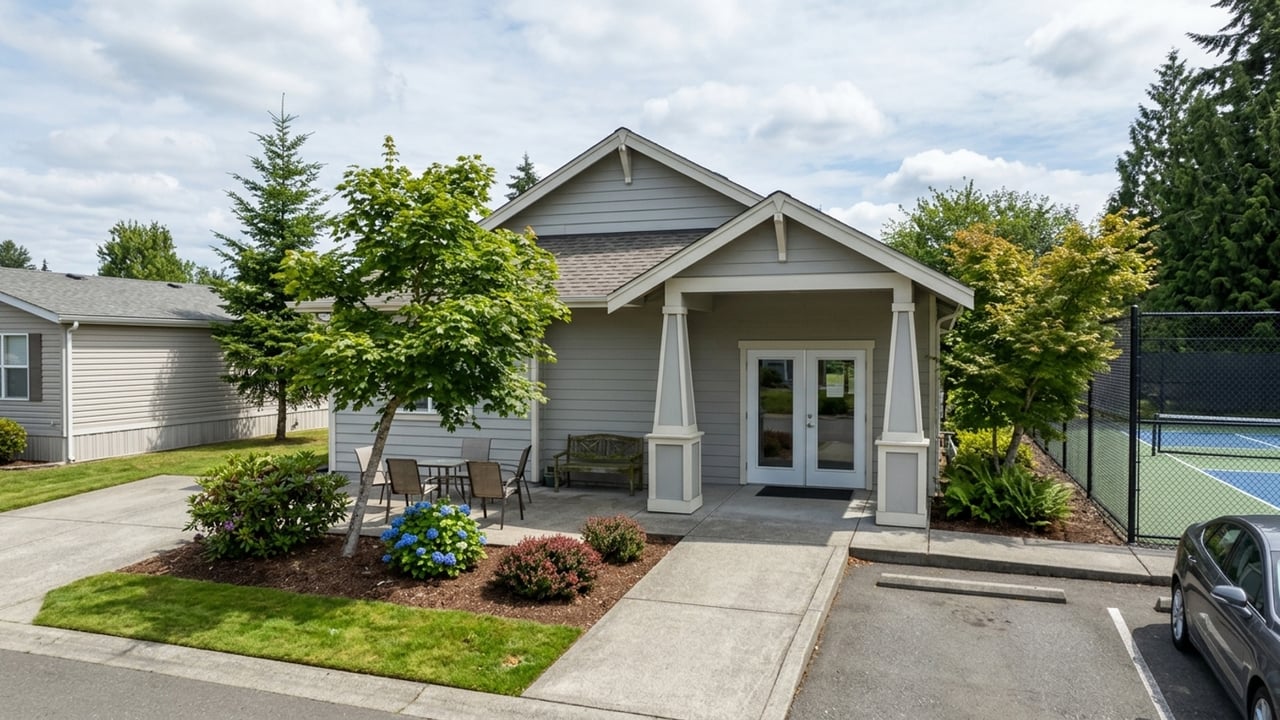
The median home price in Marysville, WA sits around $619,580, and properties are spending just 16 days on the market right now. If you're an older adult evaluating the pros and cons of living in Marysville, WA and looking to downsize or shift into senior housing, that's a fast-moving environment to search - roughly 3.1 months of available supply, which isn't much runway for decision-making.
Finding the right fit means understanding the real differences between independent housing, assisted care, and continuing care campuses. Marysville has several distinct options, from age-restricted mobile home parks to dedicated apartment complexes, and they're not interchangeable.
Types of Senior Living in Marysville
Senior housing covers a wide range of care levels and property styles. Some people want a smaller, low-maintenance home surrounded by peers. Others need daily medical support. Those are very different products.
The terminology facilities use tells you a lot - it dictates the level of care provided and the type of payment accepted. Getting clear on these categories before you start touring saves a lot of wasted time.
Active Adult and Independent Living
Active adult neighborhoods are built for residents who live entirely on their own. They typically carry age restrictions - at least one resident per household needs to be 55 or older.
Independent living usually means apartments or detached homes where the HOA handles exterior maintenance. You won't receive personal care or medical assistance from community staff. That's not a criticism, just a fact worth understanding up front.
Assisted Living and Continuing Care
Assisted living facilities provide help with daily activities - bathing, medication management, meal preparation. Monthly fees cover both room and board and the specific care services you need.
Continuing Care Retirement Communities (CCRCs) take a different approach: tiered care on a single campus. You might move into an independent apartment and later transition to assisted living or skilled nursing without having to relocate to an entirely different facility. For a lot of families, that continuity is the whole point.
Neighborhoods and 55+ Communities in Marysville, WA
Jennings Park is the Marysville neighborhood most associated with 55+ communities. It offers close access to local parks, municipal services, and everyday retail.
Age-restricted developments are spread throughout the city, and the housing styles vary considerably - manufactured homes, traditional single-family houses, apartment complexes. There's no single "senior housing" corridor here.
Established Age-Restricted Neighborhoods
Glenwood Estates, Liberty Village, Emerald Hills Estates, and Midway Gardens are specific 55+ communities in and around the Jennings Park area. They offer a mix of ownership housing types for older adults.
Factor HOA dues into your budget from the start - they cover shared amenities and common area upkeep, and they're not optional. The broader Marysville market is tight, and available units in these developments tend to move quickly when they do come up.
Senior Apartment Options
If you'd rather rent, Marysville has dedicated senior apartment buildings. Vintage at Lakewood Seniors is a prominent 55+ complex in the Smokey Point area of north Marysville.
Renting removes property taxes and surprise repair bills from the equation. Some complexes also reserve a portion of units for older adults who meet specific financial thresholds, so it's worth asking directly.
Costs and Fees for Marysville Senior Living
Senior apartments in Marysville average about $1,815 per month overall - though that number shifts considerably depending on unit size. Studios average $1,571, one-bedrooms run $2,011, and two-bedroom layouts reach $2,388.
The most affordable listed community, Vintage at Lakewood Seniors, starts at $1,493 per month. Once you move into facilities that provide higher levels of care or lifetime housing guarantees, the upfront investment gets substantially larger.
CCRC Entrance Fees
Cascade Village, a CCRC in Marysville run by Josephine Caring Community, requires entrance fees starting at $253,000 for a one-bedroom apartment. Monthly service fees start at $2,900 on top of that.
Statewide, Washington CCRC entrance fees average around $300,000 - though luxury-tier properties can reach up to $1,000,000. Monthly fees across the state typically land between $2,100 and $4,000.
Medicaid and State Assistance
Washington's primary Medicaid (Apple Health) waiver for assisted living is the COPES program. It covers long-term care services for seniors aged 65 and older who require a nursing facility level of care and need help with at least two daily activities.
To qualify, applicants must meet a 2026 maximum income allowance of $4,066.50 per month. For those whose income exceeds standard limits but who face financial hardship, the state's Medically Needy Residential Waiver has been folded into COPES. One important detail: COPES pays for care services but does not cover room and board costs in assisted living or adult family homes.
Retiring in Marysville: Cost of Living and Amenities
Marysville's overall cost of living index sits between 131 and 136 - meaning local expenses run roughly 31% to 36% above the national average. Housing is the main driver, indexing as high as 182 compared to the rest of the country.
Healthcare costs also run higher than average, with indexes ranging from 107 to 184 depending on the specific medical services measured. Those aren't small premiums, and retirees on fixed incomes should build them into their planning from day one.
Weighing the Financial Impact
Downsizing from a larger local home can help offset those elevated costs. With the median local home selling for roughly $619,580, long-time owners often have meaningful equity to apply toward a CCRC entrance fee or a smaller 55+ property.
Retirees in Marysville have access to local parks, retail centers, and community services. Before committing to anything, run your monthly budget against the area's specific housing and healthcare cost indexes - not a national average, because that won't tell you what life here costs.
Evaluating Location and Access
Proximity to daily necessities matters just as much as the community itself. Many older adults prioritize minimizing driving time to grocery stores and pharmacies, and that's a reasonable thing to test before signing anything.
The Smokey Point area in north Marysville offers concentrated retail options alongside its senior housing developments. Drive the routes from any prospective community to your preferred doctors and shopping centers - ideally at the times of day you'd be making those trips.
Finding and Touring Local Communities
Touring in person tells you things brochures and websites simply can't. If you can visit during meal times or scheduled activities, do it - you'll get a much clearer sense of what daily life looks like there.
Before making any commitment, ask for copies of the community rules and the HOA bylaws. Those documents spell out the exact fee structures and restrictions on things like pets or visitors. Read them.
Questions to Ask the Staff
Ask management how often monthly fees increase and what the historical average increase has been over the last five years. That trajectory matters more than the current rate.
Also ask about the exact procedure for transitioning to higher levels of care if your health needs change. CCRCs have specific rules about when a resident must move from independent living to assisted living, and you want to understand those terms before you sign an entrance agreement.
Frequently Asked Questions
Is Marysville, WA a good place to retire?
It depends on your budget and lifestyle preferences. Marysville's cost of living index is 131 to 136, meaning expenses are about 31% to 36% higher than the national average, driven largely by housing and healthcare costs. The area does offer established senior neighborhoods like Jennings Park and Smokey Point.
What is the average rent for 55+ apartments in Marysville?
Senior apartments in Marysville average about $1,815 per month. Studio apartments average roughly $1,571, while two-bedroom units average $2,388. Options like Vintage at Lakewood Seniors start around $1,493 per month.
What is the average entrance fee for a CCRC in Marysville?
Entrance fees vary by property. Cascade Village in Marysville starts at $253,000 for a one-bedroom apartment, plus a monthly service fee starting at $2,900. Across Washington state, CCRC entrance fees average roughly $300,000.
Is it better to rent or buy in a 55+ community?
It depends on your financial situation. Buying builds equity but comes with HOA fees and maintenance responsibilities, while renting offers more predictable monthly costs and flexibility. With local homes selling in a median of 16 days, buyers should be ready to move quickly when something comes up.
What is the 80/20 rule in a 55+ / retirement community?
The 80/20 rule is a federal housing exemption that allows communities to restrict residency by age. It requires that at least 80% of the occupied units have at least one resident who is 55 years of age or older. The community must also publish and follow policies that demonstrate its intent to operate as age-restricted housing.
What is the downside of a 55+ community?
Mandatory HOA rules and monthly dues that can increase over time are the main drawbacks. Younger family members also generally can't live with you full-time because of the age restrictions.
How far in advance should I start touring and applying for 55+ communities in Marysville?
Start at least six months to a year before your planned move. High-demand facilities and income-restricted senior apartments often carry long waitlists, and the general Marysville market isn't giving anyone much time to deliberate.