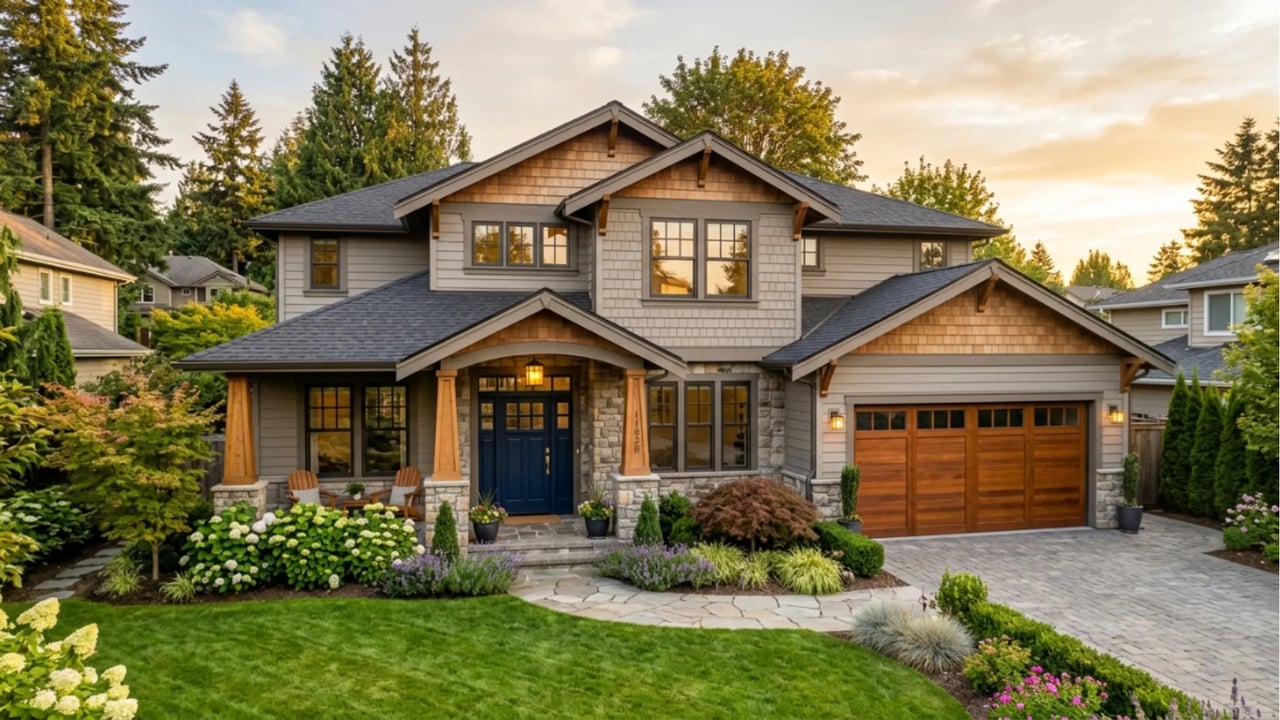
You've probably already walked your own house with a critical eye, mentally listing everything you'd fix before putting it on the market. New countertops. That primary bath you've been meaning to redo. Maybe gut the kitchen entirely.
But once you cross the $1 million mark in Snohomish County, that instinct can actually cost you money. The renovations that help a starter home sell faster often lose value at the top of the market. If you've read our guide to timing a luxury sale, think of this as step two: figuring out what's actually worth fixing before you list, and what to leave alone.
What the ROI Data Actually Shows for Luxury Renovations in Snohomish
The Small, Visible Fixes That Pay for Themselves
Here's something most sellers don't expect: the projects that actually make money back are the cheap, unglamorous ones. The 2025 cost vs. Value report from Zonda and the Journal of Light Construction found that the Pacific region, which includes Washington, posted the strongest renovation returns in the country this year, the first time in the report's 23-year history that New England hasn't held that spot. And the projects driving that number aren't glamorous at all.
Eight of the top ten highest-ROI projects nationwide were exterior replacements, not interior overhauls.
Project
A new garage door costs around $4,600 in this region and adds roughly $12,000 in resale value. That's not a typo. Buyers are judging your home before they've even parked the car, and a tired garage door or a scuffed-up front entry reads as "this whole place needs work," even when nothing structural is wrong. For a luxury listing, where most buyers scroll through photos and drone footage before ever booking a showing, that first impression is doing more work than you'd think.
Manufactured stone veneer follows the same pattern: a project that runs around $13,000 here returns closer to $30,000 at resale, one of the widest margins anywhere in the report. If your home sits on a corner lot in Edmonds or backs up to a view in Mukilteo, that's exactly the kind of upgrade that photographs beautifully and earns its keep before a single buyer ever walks through the door.
The Quiet Home Upgrades Wasting Your Money
Now flip to the other end of the list, and it gets uncomfortable fast. These are the exact projects a lot of luxury sellers assume they need before listing.
Read that last row again. A $391,000 primary suite addition recoups about $73,000 at resale. You're not getting a discount on a nice addition, you're handing roughly $318,000 to the next owner's equity. Same story with the upscale kitchen: spend $172K, get $67K back. An upscale bathroom remodel (not even an addition, just a redo) lands around 45% regionally, which sounds better until you realize you're still losing more than half of what you spent.
To be fair, not every large project is this bad; a basement remodel recoups closer to 71% nationally, a genuinely reasonable number. The pattern isn't "big equals bad”. It's those discretionary, lifestyle-driven luxury additions, the primary suite, the upscale bath, the ADU built for future rental income rather than a sale that consistently underperform, and they underperform worse the more upscale they get. That's not a bad-contractor problem. It's the same story year after year in this report, project after project, region after region.
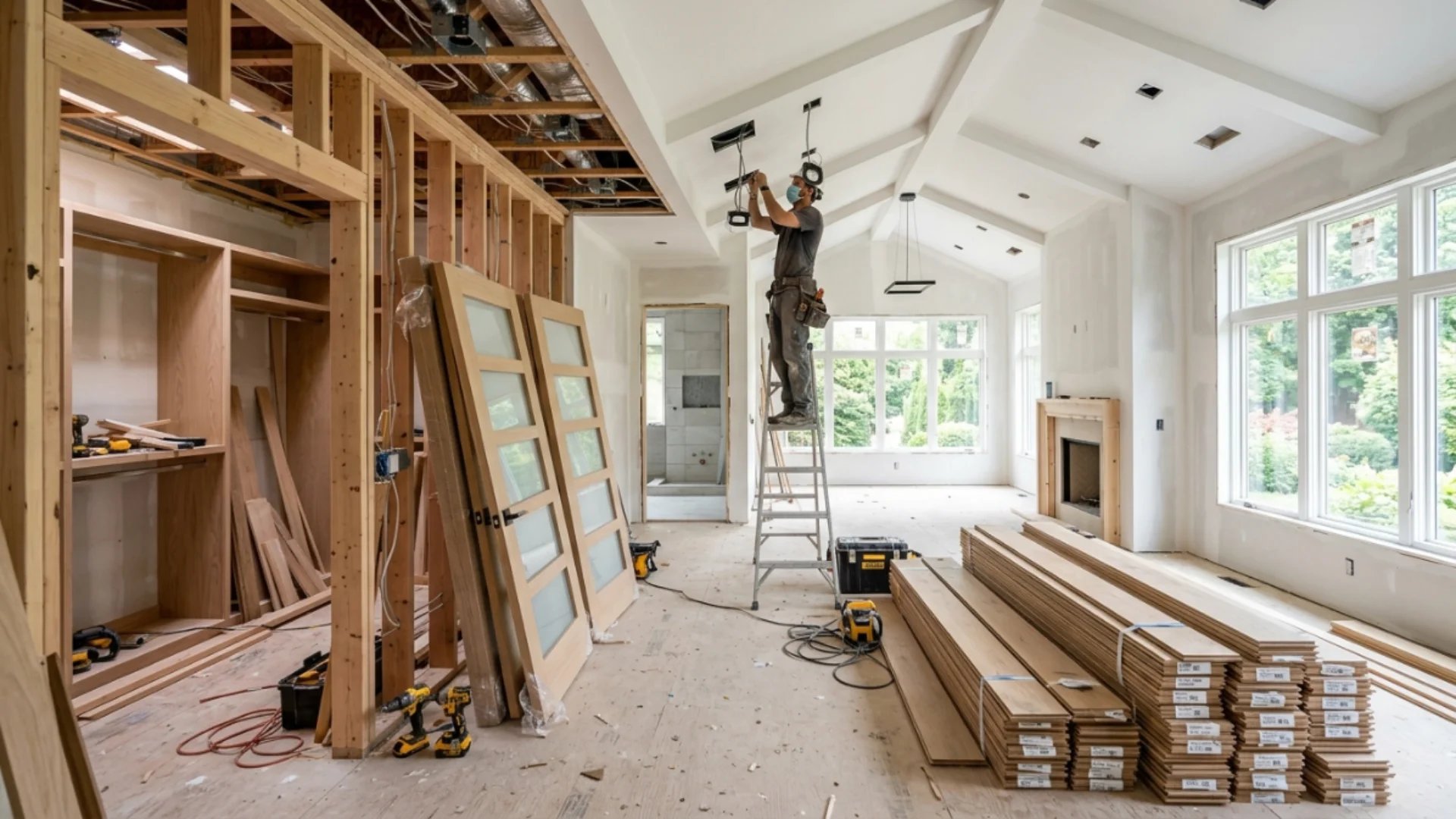
Why Huge Companies Struggle in Neighborhoods Like Ours
There's a reason for this pattern, and it's not that luxury buyers don't appreciate nice things. It's that your home doesn't sell in a vacuum, it sells against the other homes closing in Edmonds, Mukilteo, Woodway, or wherever you happen to be. Appraisers sometimes call this the principle of regression: your home's value gets pulled toward what similar homes nearby are actually selling for, no matter what you spent to get there. If homes in your immediate area are topping out around $1.8 million, a brand-new primary suite doesn't push your sale price past that ceiling. It just sits there as money you can't get back.
Say your comps in Mill Creek are clustering between $1.4 and $1.6 million. Spend $390,000 chasing a primary suite that was never part of those comps, and you haven't raised your ceiling, you've just built the nicest unsellable-at-cost addition on the block. The neighborhood decides the number. Your renovation budget doesn't get a vote.
This is exactly why the math gets riskier as the price tag goes up. A $30,000 mistake stings. A $390,000 mistake changes your net proceeds and possibly your next down payment. Before you sign anything with a contractor, get a clear, current number on what your home is actually worth as it sits today. That figure tells you where your real ceiling is, and whether a given project even has room left to pay off. Our free home valuation tool is a fast way to get that starting point before you spend a dollar on demolition.
How to Decide What's Worth Doing Before You List
What Snohomish's Luxury Market Looks Like Right Now
Timing matters here too. The July 2026 Snohomish County housing report, based on John L. Scott and NWMLS data, shows overall inventory up nearly 37% year over year, with mortgage rates sitting around 6.62%. Even so, the county as a whole is still working with just 2.6 months of resale supply. That's a tight market by most standard measures.
Zoom into the price bands that actually matter for you, though, and the picture shifts. Homes between $1 million and $1.5 million had 3.4 months of supply in July, a genuinely healthy, balanced number, with about 37% of new listings going pending within their first 30 days. Above $1.5 million, supply climbs to nearly 5 months of inventory, still solid demand, but noticeably more competition for your buyer's attention than a countywide average of 24 days on market would suggest.
Prices also softened slightly across every segment this year. None of that means the luxury market has gone cold. It means buyers above $1 million have real choices now, and with more homes to compare, they're not writing blank checks for updates nobody asked for. They're paying for homes that solve a problem, not homes that hand them three new ones.
Sellers are also being held to a higher standard on pricing. Residential homes across the county recently closed at about 99.7% of list price on average, and mortgage rates still have room to move in either direction as the Fed weighs its next move. None of that changes the core advice here, but it does mean an overpriced or under-prepped luxury listing has more competition sitting on the market than it did a year ago, and buyers have less patience waiting for the right one to show up.
What Snohomish Luxury Buyers Actually Notice
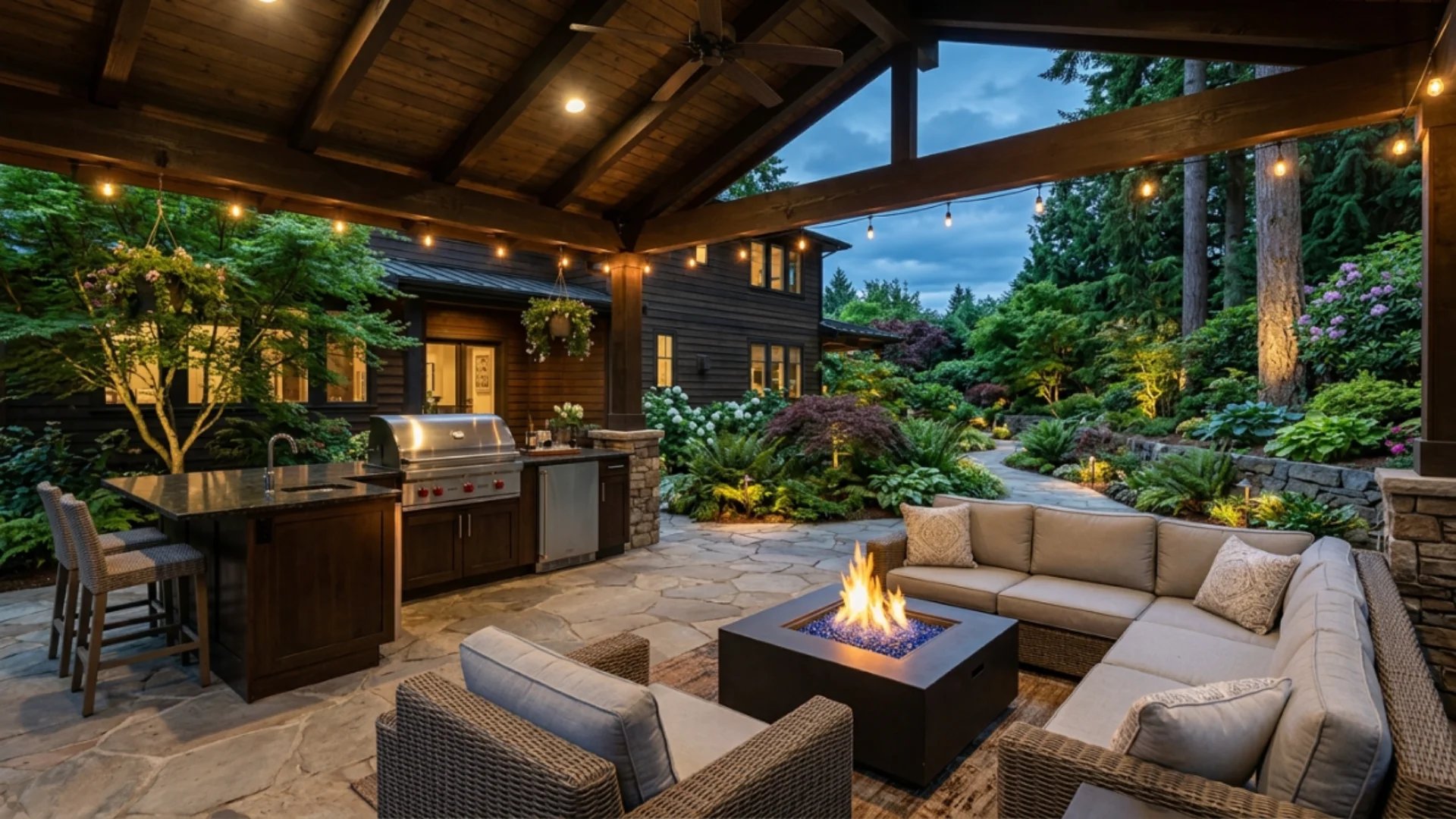
Buyers moving into Edmonds, Mukilteo, or Mill Creek from King County tend to be decisive once they find the right property. Many are relocating for work, and they've already toured enough homes to know exactly what they want. Smart home systems, indoor-outdoor living, and a genuinely functional primary suite have become baseline expectations at this price point rather than upgrades that wow anyone.
A dedicated home office with real soundproofing, a primary bathroom that feels more spa than hotel, and a backyard actually built for entertaining, a covered outdoor kitchen and a fire feature, not just a mowed lawn, have quietly moved from "nice to have" to "expected" in this segment over the past year or two. That doesn't mean you need to build all of it before you list. It means your staging and marketing should highlight what you already have, and your prep budget should go toward making those spaces show well, rather than adding square footage nobody's going to pay full price for anyway.
But buyers rarely walk away over a kitchen that's simply a few years out of style. Picture two similar homes on the same Edmonds Street, both listed the same weekend. One has a ten-year-old kitchen that's clean and works perfectly. The other has a brand-new HVAC unit hiding a roof that's due for replacement in two years. Buyers touring both will forgive the dated cabinets far faster than they'll forgive the roof once an inspector flags it. Deferred maintenance kills momentum and invites renegotiation. Cosmetic "datedness" almost never does.
A Simple Renovate-or-Skip Checklist
- Remember that mental list from the start of this guide, the countertops, the primary bath, the kitchen gut job? Run each item through these questions before you call a single contractor:
- Renovate it if there's a clear inspection red flag: an aging roof, failing HVAC, electrical or plumbing issues, or anything that would show up in a report and spook a decisive buyer.
- Skip the big remodel if the space is simply dated but works fine. That kitchen from your original mental list? If it's functional, it can probably stay.
- Spend here instead: fresh paint, deep cleaning, professional staging, landscaping, and the small exterior fixes from earlier in this guide. That's where the data says your money actually comes back.
- Get a pre-listing inspection. It's the cheapest way to find out what actually matters, instead of guessing based on how a room looks.
- Start early. Give yourself 60 to 90 days before listing to sort repairs from cosmetic wish-list items, not 30.
- Get local eyes on it. What flies in Woodway won't necessarily fly in Mill Creek. Your neighborhood's comps set your ceiling, not a national blog post.
Snohomish Luxury Sellers Should Decide Smartly
For most luxury sellers in Snohomish County, the smartest move isn't "renovate everything" or "do nothing". It's fixing what an inspector or a decisive buyer would flag, and skipping the fantasy of a six-figure kitchen or primary suite overhaul that the data says you likely won't recoup. Put that same budget toward staging, curb appeal, and accurate pricing instead, and you'll come out ahead far more often.
If you're still not sure which category your project falls into, that's exactly the kind of call worth making before you sign anything. Our Seller's Guide walks through the full prep-to-close process, OR our team can look at your specific home and tell you straight whether that renovation is worth the money. So, book your consultation call with Pilchard Properties for $0.