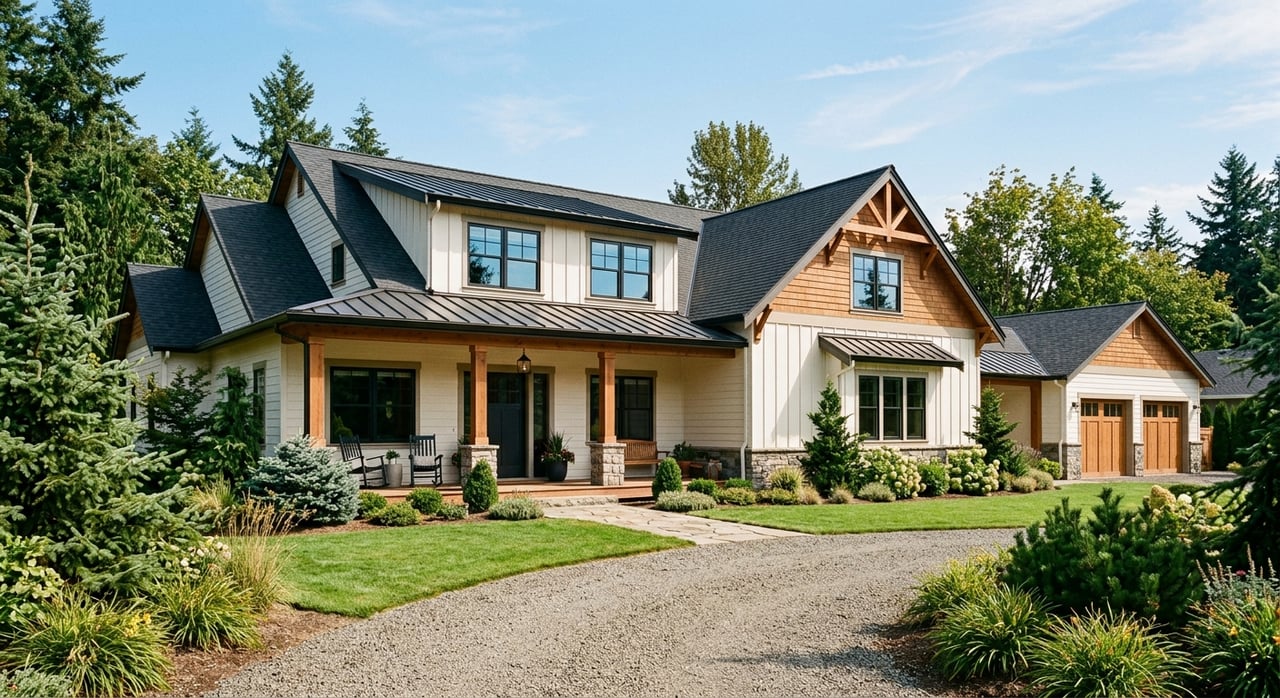
Looking for the right part of Stanwood to call home? That question matters more than many buyers expect, because this small Snohomish County city offers a few very different day-to-day lifestyles within a compact footprint. If you are trying to balance commute options, lot size, home style, and everyday convenience, understanding those differences can help you narrow your search faster and make a more confident decision. Let’s dive in.
Why Stanwood Appeals to Buyers
Stanwood sits about 50 miles north of Seattle and serves as a town center for the greater Stanwood and Camano area, with a setting the city describes as a coastal farming community. That mix gives you a blend of small-town identity, local services, and access to broader regional connections through road, transit, and rail. Community Transit’s Stanwood destination guide also highlights the city’s focus on preserving historic character while improving walkability, safety, and connectivity downtown.
For a small city, Stanwood offers a meaningful variety of housing and lifestyle options. According to U.S. Census QuickFacts for Stanwood, the 2024 population estimate is 8,943, the owner-occupied housing rate is 67.8%, the median owner-occupied home value is $547,400, and the mean travel time to work is 35.3 minutes. That snapshot helps explain why Stanwood attracts a mix of first-time buyers, move-up buyers, and people relocating for a little more breathing room.
The city’s 2024 to 2044 comprehensive plan also points to a wider mix of housing types over time, including accessory dwelling units, cottages, duplexes, and townhouses. In practical terms, that means your home search in Stanwood may include older homes, newer subdivisions, and some denser pockets depending on where you focus.
Stanwood’s Main Lifestyle Pockets
When buyers talk about Stanwood, they are often really talking about one of three lifestyle patterns: historic downtown, Uptown and newer east-side development, or the country edge. Each one offers a different feel.
Historic downtown living
If walkability and small-town character matter most to you, downtown Stanwood may stand out right away. The city’s land-use planning describes Downtown Stanwood as including the East District, the 271st corridor, and the West End, with a pedestrian-friendly mixed-use vision in the Main Street Business I area and design standards aimed at preserving the historic downtown look and scale.
The city is also investing in downtown through revitalization efforts like the Twin City Mile program, storefront improvements, Depot Park, and preservation of the historic brick road. You can see that long-term direction in the city’s land use planning documents. For buyers, this area often fits best when convenience, charm, and access to local businesses matter more than having the largest lot.
That said, not every part of downtown feels the same. The city notes that the west end is generally older, has smaller lots, and sits in the floodplain, which can make it feel quite different from the east side of town.
Uptown and newer east-side neighborhoods
If you want a more suburban feel, newer construction potential, and easier access to commercial services, the east side may be a better fit. The city describes Uptown as the focal point of the east end, with larger parcels and a mix of retail, office, service, mixed-use, and residential uses.
Planning documents also state that new subdivisions have been built on higher ground in eastern Stanwood, while the west end has had less remaining acreage for new home construction. That difference matters when you are comparing home age, neighborhood layout, and lot configuration. In many cases, this part of Stanwood appeals to buyers who want a more typical suburban routine without leaving the area.
Country edge living
Beyond the compact core, Stanwood can feel much more rural. The city’s low-density residential designation includes primarily single-family homes, and it may also include larger-lot properties and hobby farm settings. The broader planning vision emphasizes preserving agricultural land and rural history, which helps explain why the edges of town often feel more open and country-oriented.
This is usually the best fit if you prioritize space, privacy, and a little separation from busier in-town patterns. The tradeoff is that your daily routine is typically more car-dependent, and commute planning becomes more important.
How to Match Your Lifestyle to the Right Area
The best Stanwood neighborhood for you depends less on a name and more on how you want daily life to work. Start by thinking about what you want your average weekday and weekend to look like.
If you want coffee shops, services, transit access, and a more connected street grid, downtown may be worth a closer look. If you prefer newer housing patterns, easier parking, and a suburban-style setup, the east side may be a stronger match. If your wish list includes extra land, privacy, or a more rural pace, edge-of-town properties may make more sense.
A few practical questions can help narrow the field:
- Is the home in the historic downtown core, Uptown, or the rural edge?
- Do you want walkability, or are you comfortable driving for most errands?
- Would you prefer an older home with character or a newer build on higher ground?
- How important are lot size and privacy?
- Will your commute depend on SR 532, I-5, park-and-ride access, or rail service?
Commute Patterns to Know
For many buyers, Stanwood works best when the transportation picture is clear from the start. Commute choices here are shaped heavily by SR 532, I-5 access, transit connections, and passenger rail.
According to a WSDOT SR 532 corridor analysis, SR 532 is the primary east-west corridor linking Stanwood and Camano Island to I-5, and it also functions as Stanwood’s downtown main street. The same report identifies park-and-ride locations in downtown Stanwood and near the I-5 interchange.
Transit can also be part of the equation. Community Transit service materials show Route 905 running between Stanwood and Lynnwood City Center Station, with stops in Smokey Point, Marysville, and Everett. Route 907 connects Stanwood I-5 Park & Ride to Seaway Transit Center, and Route 905 links to Lynnwood City Center, where Link 1 Line service continues to Seattle.
Stanwood also offers passenger rail access downtown. The city’s public transportation page notes that Stanwood Station has daily Amtrak Cascades service, adding another option for regional travel.
Parks, Trails, and Everyday Amenities
Lifestyle is not just about the house. It is also about what you can enjoy nearby on a regular basis.
Stanwood’s parks and trails system offers several useful recreation spaces for a city of its size. Heritage Park serves as a major sports and recreation hub, while Church Creek Park includes ballfields, trails, and a picnic shelter. Hamilton Landing Park adds waterfront access, Lions Park provides a smaller neighborhood park option, and the Port Susan Trail connects the park-and-ride area to Hamilton Landing Park.
Downtown gathering spaces are also part of the city’s long-term vision. Depot Park, near the Amtrak station, is planned for late 2026, which supports the city’s broader downtown revitalization efforts.
Schools and Address-Based Planning
If schools are part of your home search, the most practical step is to verify the specific address early. The Stanwood-Camano School District includes 5 elementary schools, 2 middle schools, 1 high school, 1 alternative middle school, 1 alternative high school, and a parent partnership program.
The district also notes that elementary attendance boundaries changed for the 2023-24 school year, and school placement is address-based. That means two homes that seem close together may not always follow the same attendance pattern, so it is smart to confirm boundaries before making a decision.
A Smart Buyer Checklist for Stanwood
As you compare homes in Stanwood, keep your focus on the details that shape daily life, not just the price or square footage. A strong search usually includes both property-level and location-level questions.
Use this simple checklist as you tour homes:
- Identify whether the property is in downtown, Uptown, or the rural edge
- Ask whether the area is older and lower-lying or on higher eastern ground
- Review commute routes using SR 532, I-5, transit, or rail options
- Check school attendance boundaries by address if relevant to your search
- Compare lot size, parking, and neighborhood layout with your daily routine
- Think about whether you want walkability, newer development, or more privacy
What This Means for Your Home Search
Stanwood is appealing because it gives you choices. You can look for a home near the historic core, a newer east-side setting with a suburban feel, or an edge-of-town property that leans more rural. Those options can feel very different, even within the same city.
The key is to match the home to the lifestyle you actually want. When you know how you want to live day to day, it becomes much easier to sort through listings and focus on the parts of Stanwood that fit you best. If you want local guidance as you compare neighborhoods, commute patterns, and home types, Pilchard Properties is here to help you make a confident move.
FAQs
What are the main neighborhood types in Stanwood for homebuyers?
- Stanwood homebuyers typically compare three main lifestyle pockets: historic downtown, Uptown and newer east-side development, and the more rural edge-of-town areas.
What is downtown Stanwood like for buyers?
- Downtown Stanwood generally appeals to buyers who want small-town character, pedestrian-friendly areas, and convenient access to local services, though some west-end areas have older homes, smaller lots, and floodplain considerations.
What is the east side of Stanwood like for buyers?
- Stanwood’s east side, including Uptown, tends to offer a newer suburban feel, larger parcels, easier access to commercial services, and more recent subdivision development on higher ground.
What should buyers know about Stanwood commutes?
- Stanwood commutes often center on SR 532 and I-5, with added options through downtown and I-5 park-and-rides, Community Transit express routes, and Amtrak Cascades service from Stanwood Station.
How do school boundaries work in Stanwood?
- The Stanwood-Camano School District uses address-based school placement, so buyers should confirm the current boundary for any property they are considering.
Are there parks and trails in Stanwood?
- Yes, Stanwood has several parks and trail amenities, including Heritage Park, Church Creek Park, Hamilton Landing Park, Lions Park, and the Port Susan Trail.